
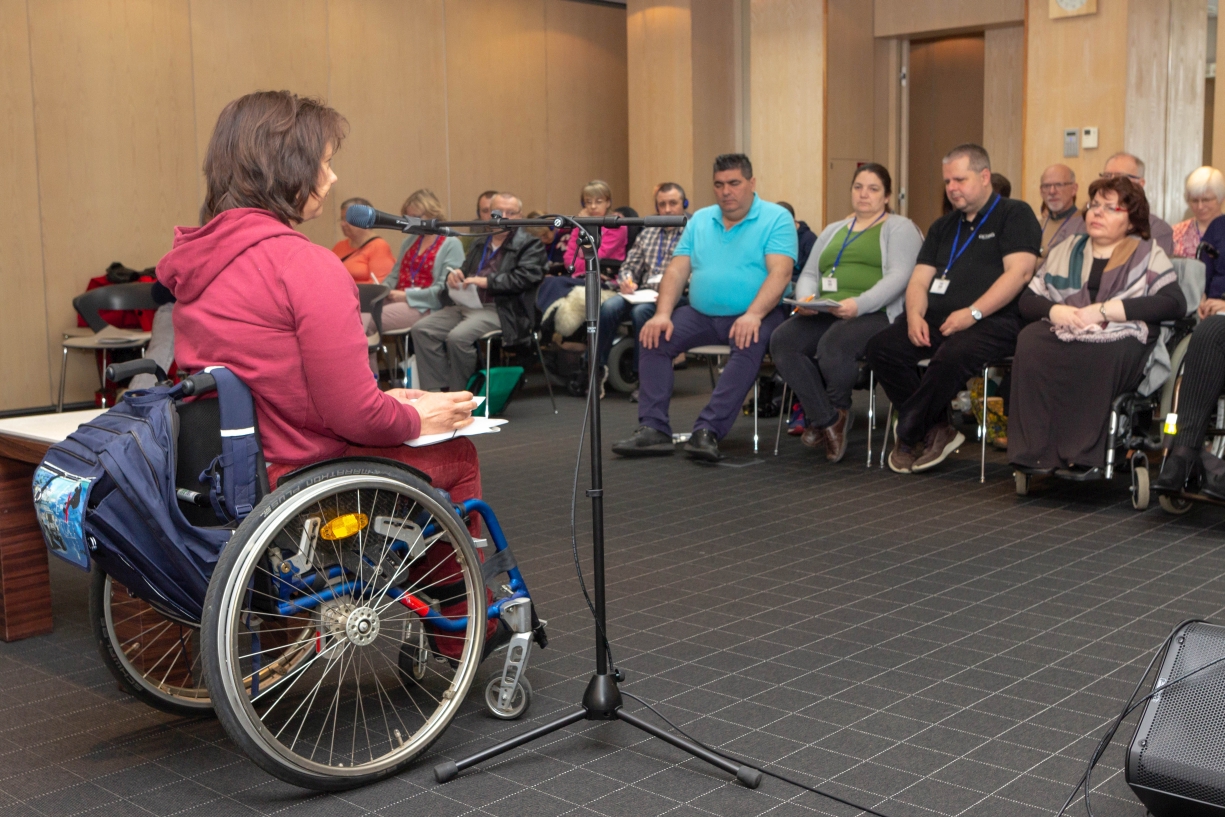
In Europe, over 100 million people have a disability. It makes them the largest minority group in Europe and worldwide. Recognizing this need, several Christian organizations across Europe joined forces at the start of this century to create the European Disability Network (EDN).
The needs and possibilities of people with a disability are diverse. In the more wealthy western countries, the authorities have built up practical support. In Eastern Europe, the most elementary necessities are often lacking. For instance, not everyone who needs it has a wheelchair. Slowly but surely accessibility is being worked on. However, in every case, personal loneliness is the biggest problem.
It is in the message of the Gospel that many find comfort. Nevertheless, how will they learn about this message if it is not shared with them? How will they get to know the churches if still very little is done to make them welcome? How will these people with a disability witness about the many blessings they have received through Jesus Christ if they are given little or no opportunity to speak in public? How can we involve them?
VISION
The EDN desires to see a dynamic disability ministry in every European country, resulting in increasing numbers of people with disabilities finding faith in Christ and being fully involved in churches which are actively inclusive.
MISSION
The EDN is a European network that:
- promotes and supports evangelistic ministry among and by people with disabilities in Europe
- provides a united voice for disability ministry in Europe
- affords support, encouragement and fellowship to its partners
OBJECTIVES
The Network seeks to:
- provide a biblical understanding of disability
- represent European Disability ministry at European wide events
- provide training in:
- Communicating the vision with churches, pastors, donors
- Training disability ministry workers
- Counselling
- Leadership
- Organisation
- facilitate the exchange and sharing of resources
- stimulate prayer and practical support for its partners and people with disabilities through regular communication

Extend an Invitation
People with disabilities are the largest people group in Europe and worldwide and yet they are the least reached by the Gospel. When we read the Gospels, we realize that Jesus paid special attention to people with disabilities. God created humans for community. He wants everyone to be part of his body, the church.
God extends a special invitation to disabled people. Why? Because he looks past their weaknesses and limitations and sees their strengths, abilities and gifts. Society sees only their disabilities, blinded to their gifting and potential. Many churches have that same blind-spot.
The church is missing something if disabled people are not represented in our congregations; they are an indispensable part of the church of the resurrected Jesus. A church without disabled members is incomplete; in fact, it is itself disabled and impoverished. It is not about helping the “poor” disabled, but rather about giving support to empower and include people, breaking down barriers in buildings and attitudes.
We want to see churches and congregations with space for all people, with the willingness to include people with disabilities in the leadership and ministries, and to involve them in the congregational life as full members. What are our priorities? Shouldn’t they be to follow Christ’s example and make a way first for those who are unable to overcome obstacles on their own?
Not recognising the needs of people with disability leads to exclusion, because only when every person makes a way for their fellow humans with disabilities will they be enabled to participate. Removing barriers will make churches and communities better places for everyone.
Wherever a congregation, a conference or any kind of event has consciously taken the step of actively including people with disability we hear that everybody has been enriched and blessed by learning from the different life experiences and different viewpoints of people living with disability. There is a need for awareness in this regard in churches and congregations.
Leaders need to stir up, encourage and teach their members to actively remove barriers and reach out to include those missing people, because nothing starts in communities and churches if responsible people do not speak openly and lead by example.
If we live into old age, we will all experience disability. Does this thought ever appear in our teaching? It’s good to know that weakness is normal and no one has to stay strong when in reality they are not.
Sound theological and practical teaching on this subject is desperately needed. Let us pray and work towards our churches becoming places where everyone is noticed, taken seriously, accepted and valued regardless of any limitations. Together, let us fulfil Jesus’ command to share our lives with one another in brotherly love. We all need each other.
 European Disability Network